
Promoting Open Innovation for a Cure for Alzheimer’s Disease
As a leading company in dementia, we have always been at the forefront of innovative therapeutics for Alzheimer’s disease (AD) with the creation of Aricept and LEQEMBI.
Given that AD drug discovery is currently a global “moonshot” project (challenging research and development aiming to create innovations based on bold ideas that are not extensions of conventional technologies), it is crucial for scientists from various sectors to concentrate their collective strengths, including specialized knowledge, ideas, and technology while fostering mutual trust and sharing a common goal. Our open innovation ecosystem has been created to realize this concept, aiming to create comprehensive solutions for prediction, prevention, treatment, and care in dementia through pharmacotherapeutics and non-pharmacotherapeutics.
Our Areas of Interest
We are seeking proposals from scientists with unique ideas and research programs in the following areas for the development of therapeutic drugs targeting AD and broader dementia, following amyloid β and tau.
-
Modulation of the Neuro-Glia-Vascular Unit in the Brain
Regulating interaction of neurons, glial cells and neuronal blood vessels in the brain to treat or reduce clinical decline due to neurodegenerative diseases such as AD and Parkinson’s disease (PD).
-
Nerve Regeneration Without Transplantation
Ideas or programs for promoting the regeneration of the central nervous system and activating brain functions through a method that does not rely on cell transplantation.
-
Brain- or Cell-Specific Delivery Systems
Ideas or programs for developing technology to deliver therapeutic modalities such as antibody, nucleic acid drugs and others into the brain, or targeting specific cells in the central nervous system with therapeutic modalities, including small-molecule drugs.
-
Novel Fluid Biomarkers for Neurodegenerative Disease
Identifying novel blood, cerebrospinal fluid, or other body fluid biomarkers for neurodegenerative diseases other than AD, such as dementia with Lewy bodies, Parkinson’s disease dementia, frontotemporal lobar degeneration, and others.
-
Brain Stimulation Techniques to Enhance Synaptic Connections
Ideas or programs to restore brain function by promoting synapse formation and strengthening neuronal circuits via brain stimulation including non-pharmacotherapeutics.
Open Innovation Achievements
Under the principles of trust, long-term commitment, collaborative work, and shared goals, we have formed partnerships with multiple universities and companies:
University College London (UCL)
In 1990, Eisai concluded a joint research agreement with UCL and have been conducting basic research on the central nervous system at the Eisai London Research Institute, which was established within UCL in 1993. Since 2012, we have developed our collaboration to leverage the extensive knowledge accumulated at UCL to create innovative medicines for neurodegenerative diseases. A Phase 2 clinical trial for E2814, an anti-MTBR tau monoclonal antibody, is currently underway.
Keio University
We have been collaborating with Keio University since 2017. Our joint efforts focus on the discovery of novel drug targets for AD through in-depth analysis of cohort studies managed by Keio University.
Washington University in St. Louis
Our collaboration with Washington University in St. Louis began in 2022, with the aim of establishing a novel conceptual framework for neurodegenerative diseases by employing cutting-edge technologies available at Washington University in St. Louis.
NEURii
In 2023, the research collaboration NEURii was initiated in conjunction with the University of Edinburgh, LifeArc, Health Data Research UK, and Gates Ventures. Our shared objective is to develop digital diagnostics and therapeutics for dementia by utilizing the vast amount of medical health data accumulated in the United Kingdom.
BioArctic AB
Since 2005, we have had a fruitful collaboration with BioArctic AB, focusing on the drug discovery of lecanemab. Our dedicated efforts in this collaboration have resulted in the traditional approval of lecanemab as a treatment for AD by the U.S. FDA in 2023.
Sysmex Corporation
In 2016, we established a collaboration with Sysmex Corporation with the goal of developing a blood-based diagnostic test for AD. Through our joint efforts, we successfully obtained an approval for an In Vitro Diagnostic (IVD) in 2022. This achievement marks a significant milestone in our pursuit of more accessible and effective diagnostic tools for AD.
By joining forces with these esteemed institutions and organizations, we strive to advance our collective understanding and capabilities of drug discovery in the field of neurodegenerative diseases.
Leadership
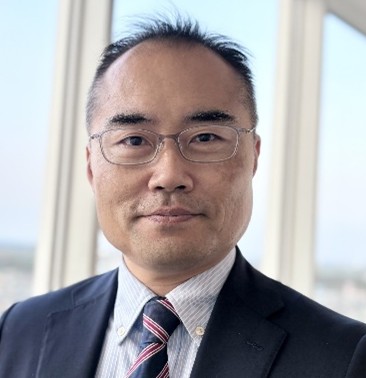
Akihiko Koyama, Ph.D.
Group Officer, Deep Human Biology Learning (DHBL) Office Head and Head of Portfolio Strategy, DHBL HQs, Eisai Co., Ltd.
Since April 2026, Akihiko Koyama, Ph.D., has served as the Deep Human Biology Learning (DHBL) Office Head and the Head of Portfolio Strategy, DHBL at Eisai Co., Ltd. He is promoting Eisai’s drug discovery knowledge, collaborative research projects integrating technologies, and joint development programs by identifying academia and industry partners conducting cutting-edge and innovative research in Eisai’s focus areas of drug discovery in neurology, oncology and global health.
Dr. Koyama began his career at Eisai in 2003 as a biology researcher specializing in central nervous system (CNS) disorders. He has since contributed to numerous drug discovery projects targeting Alzheimer’s disease and Parkinson’s disease. In 2008, he joined the Gladstone Institute of Neurological Disease at UCSF as a Visiting Researcher, where he developed and analyzed disease models for Alzheimer’s disease.
In 2011, he relocated to Boston, Massachusetts to establish a new CNS research group at Eisai’s U.S. research facility, where he spearheaded exploratory research in CNS field. In 2018, he directed neurology translational research at Eisai’s Clinical Development headquarters in New Jersey. From 2022, he led global drug discovery concept validation and biomarker research. From 2025, he served as Digital Innovation Head, where he promoted digital transformation and AI integration across Eisai’s R&D operations.
Dr. Koyama received his Ph.D. in 2003 from Graduate School of Pharmaceutical Sciences, the University of Tokyo.
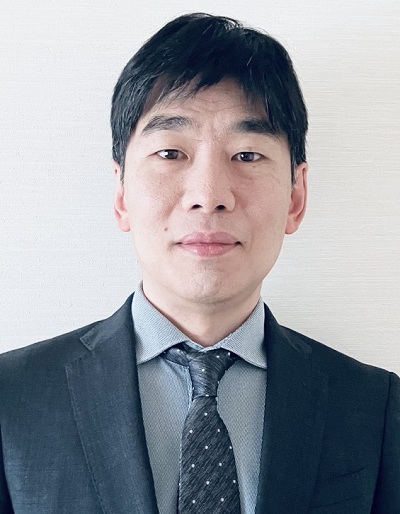
Akihiko Yamamoto, Ph.D.
Head of External Intelligence Group, Portfolio Strategy Department, Deep Human Biology Learning (DHBL) HQs, Eisai Co., Ltd.
Since April 2026, Akihiko Yamamoto, Ph.D., has served as the Group Head of the External Intelligence Group in the Portfolio Strategy Department at Eisai Co., Ltd. By monitoring external drug discovery trends, he explores and identifies partners that bridge science and drug discovery, while incubating new collaborations to integrate cutting-edge technologies and medicinal discovery assets into Eisai.
After joining Eisai in 2006, Akihiko Yamamoto, Ph.D., began his career as a medicinal chemist. He has primarily focused on oncology research, contributing to drug discovery projects involving kinase inhibitors, Antibody-Drug Conjugates (ADC), and targeted protein degraders. In 2010, he joined a research program at Professor Yoshihito Kishi’s laboratory at Harvard University for approximately one and a half years. Following this, from 2015, he served as an Exploratory Project Leader, where he focused on establishing drug discovery platforms for epigenetics.
From 2020, he engaged in external public relations activities at Eisai’s PR Department, after which he joined the Corporate Planning Department in the same year. From 2022, he served as Head of the Corporate Portfolio Group, where he was responsible for aligning R&D strategies with corporate management and planning. In 2023, he returned to the R&D division as the Head of Japan Site within the Collaboration & Incubation Department. Since 2024, he has concurrently served as Global Lead for the joint research and development program with Harvard University regarding the natural product Halichondrin B, while managing related alliance operations.
Dr. Yamamoto graduated from the Faculty of Engineering, Kyoto University in 2001, and received his Ph.D. in 2006 from the Department of Synthetic Chemistry and Biological Chemistry, Graduate School of Engineering, Kyoto University.
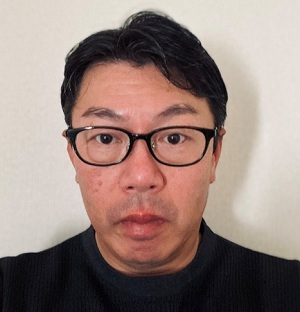
Gota Kobayashi
Head of Strategic Alliance Group, Portfolio Strategy Department, Deep Human Biology Learning (DHBL)HQs, Eisai Co., Ltd.
Gota Kobayashi leads Eisai's Strategic Alliance function, overseeing global R&D alliances with academic institutions, research organizations, and industry partners. His team drives collaborative research, co-development, licensing, and external innovation initiatives to advance the discovery and development of transformative medicines.
Prior to joining Eisai, Mr. Kobayashi held clinical development roles at Johnson & Johnson Innovative Medicine, contributing to multiple oncology programs across solid tumors and hematologic malignancies. After joining Eisai, and through 2021, he built a career exclusively in oncology R&D and business — spanning clinical development, marketing, medical affairs, and R&D strategy. Throughout this period, he led product strategy and commercialization for multiple oncology therapeutics before heading the medical affairs and clinical development planning functions, where he drove evidence generation and international development strategy while concurrently serving as Global Project Lead for an FGFR inhibitor program. This end-to-end experience across the pharmaceutical value chain, from drug discovery through post-launch value maximization, underpins his approach to building productive, science-driven partnerships. Since 2022, he has broadened his focus beyond oncology to lead R&D alliance strategy and operations across all therapeutic areas, including neuroscience, under Eisai's integrated R&D framework.
Mr. Kobayashi received his MS degree in Biology from the Graduate School of Engineering, Shinshu University.

Tonya Gilbert, Ph.D.
Director, External Innovation, Deep Human Biology Learning (DHBL) Office, Eisai Co., Ltd.
Tonya Gilbert, Ph.D., leads external innovation activities for the U.S. Group within Eisai’s Deep Human Biology Learning (DHBL) Office, where she identifies and manages academic, biotech, and non profit collaborations that support Eisai’s global discovery and early development programs. Her work focuses on neurology, with particular emphasis on neurodegeneration. Dr. Gilbert also works closely with Eisai Innovation, Inc. to foster strategic partnerships.
Dr. Gilbert brings broad scientific training and translational experience to her role. She approaches external innovation with scientific curiosity and a commitment to respect driven relationship building. She is passionate about working with academic investigators and early stage companies to advance novel ideas toward meaningful patient impact.
Prior to joining Eisai, Dr. Gilbert spent over seven years at Eikonizo Therapeutics, Inc., where she advanced from Scientist to Executive Director of Translational Research. There, she contributed to disease modifying therapeutic programs for amyotrophic lateral sclerosis and frontotemporal dementia, with responsibilities spanning cross functional R&D leadership, program and alliance management, and due diligence.
Earlier in her career, she completed a postdoctoral fellowship at the Massachusetts General Hospital Athinoula A. Martinos Center for Biomedical Imaging, conducting human neuroimaging research in neuropsychiatric disorders and aging.
Dr. Gilbert received her B.S. in Biochemistry from SUNY Geneseo and her Ph.D. from the Johns Hopkins University School of Medicine through the Department of Pharmacology and Molecular Sciences.

Peter Atkinson, Ph.D.
Executive Director, Head of Hatfield Research Laboratories and External Innovation, Eisai Ltd.
Since joining Eisai Ltd. in 2011, Peter Atkinson, Ph.D., has led scientific, strategic, and partnership-driven initiatives across Eisai’s global discovery and external innovation activities. He currently serves as Executive Director and Head of Hatfield Research Laboratories (HRL) at Eisai’s EMEA headquarters, where he oversees laboratory operations, scientific capability development, and cross-functional research strategy. In addition, he leads the UK External Innovation function, responsible for scouting, evaluating, and managing discovery-stage collaborations and investment opportunities that support Eisai’s Neurology portfolio.
Before joining Eisai, Dr. Atkinson built extensive experience in neurology and psychiatry drug discovery at leading pharmaceutical organizations. He contributed to multiple early-stage programmes at SmithKline Beecham (later GlaxoSmithKline) in the UK and subsequently at Wyeth Research (later Pfizer) in the United States. Across these roles, he helped advance target identification initiatives and preclinical programmes spanning neurodegeneration, neuropsychiatry, and molecular neuroscience.
At Eisai, Dr. Atkinson has played a key role in expanding global academic and biotech engagement, strengthening external scientific networks, and shaping Eisai’s approach to collaborative innovation. He also contributes to company-wide strategy discussions related to emerging science, technology platforms, and portfolio opportunities.
Dr. Atkinson holds a Ph.D. in cell physiology and pharmacology from the University of Leicester, followed by an Industrial Postdoctoral Fellowship at Wyeth Research. He continues to actively support early scientific careers, innovation ecosystems, and cross-sector research partnerships in the UK and internationally.
Inquiries
To learn more about Open Innovation, contact us here.