
- Patients and People
- Global Health
September 2, 2026
In the main report, we shared an account of the meeting held in São Tomé and Príncipe on May 29, 2026, to launch the final surveillance activities under the World Health Organization (WHO) program toward the elimination of lymphatic filariasis (LF).
But what do we know about São Tomé and Príncipe? The country may not be familiar to many people, and even fewer might have had the opportunity to visit this country.
In this special report, Miwa Jindo of Eisai’s Sustainability Department, who became the first Eisai employee to visit São Tomé and Príncipe to attend the meeting, shares her impressions of the country, its people and local communities, and what she learned and experienced during her trip.
※Please click here for the main report: The “Last Mile” Toward the Elimination of Lymphatic Filariasis in the Democratic Republic of São Tomé and Príncipe-What the Elimination of Lymphatic Filariasis Means for a Country and Its People-

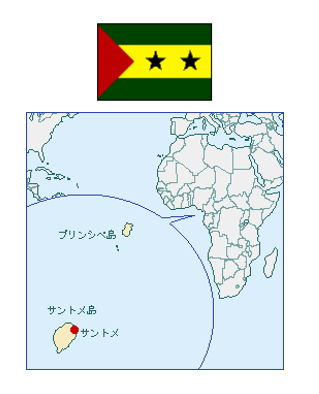
Source: Ministry of Foreign Affairs of Japan website
① About the Democratic Republic of São Tomé and Príncipe
São Tomé and Príncipe is an island nation located in the Gulf of Guinea, off the west coast of Africa. The country consists primarily of the islands of São Tomé and Príncipe, with its capital being São Tomé. With a land area of approximately 1,000 square kilometers—roughly half the size of Tokyo—and a population of approximately 240,000, comparable to that of Tsukuba City in Ibaraki Prefecture, it is one of Africa’s smaller countries.
São Tomé and Príncipe gained independence from Portugal in 1975 and is now a republic. Portuguese is the official language, and Christianity is the predominant religion. Agriculture is a major industry, with coffee and cocoa among the country’s traditional export products dating back to the period of Portuguese rule.
São Tomé and Príncipe is classified by the World Bank as a lower-middle-income country. As a small island nation with limited land area, a relatively small population, and geographic isolation, it faces structural development challenges and is particularly vulnerable to external environmental changes and the impacts of climate change. At the same time, the country is endowed with a rich natural environment and biodiversity, offering significant potential for nature-based tourism.
② Just Like a Local Bus? A Multi-Stop Journey Across Africa
A quick question before we go any further; how many of the following cities have you heard of?
・Incheon
・Addis Ababa
・Yaoundé
・Libreville
I must admit that before this trip, Incheon in South Korea was the only one I knew. Addis Ababa is the capital of Ethiopia, Yaoundé of Cameroon, and Libreville of Gabon. My journey to São Tomé and Príncipe took me through all of these cities, involving four connections and approximately 35 hours of travel before finally reaching my destination.
One of the most memorable aspects of the journey was the way passengers came and went at each stop while the same aircraft continued on its way —just like a local bus stopping along its route. At Yaoundé Airport in Cameroon, for example, passengers continuing on to Libreville remained on board while others disembarked. The flight crew changed, the cabin was cleaned, and about an hour later, new passengers boarded before the aircraft departed again. As an aside, Yaoundé had not been indicated as a stop on my itinerary, so I was unaware of the stop. Mistaking Yaoundé for Libreville, I gathered my belongings, headed toward the aircraft door, and nearly disembarked. When I realized my mistake and returned to my seat, the passenger next to me greeted me with a smile and said, “Welcome back.” After many hours of travel and a certain level of tension, those simple words immediately put me at ease.
As for connectivity, Wi-Fi was available in Addis Ababa, although the connection was quite slow. In Yaoundé and Libreville, however, I was unable to connect at all. With little else to do but read the books I had brought with me, I unexpectedly found myself enjoying a period of digital detox. At Libreville Airport, I was surprised to come across SLAM DUNK and ONE PIECE on a bookshelf. The unexpected sight of these familiar Japanese manga titles made me stop and take a closer look. Having already finished the books I had brought with me, I was tempted to buy one but gave up on the idea when I realized they were in French. At that moment, I regretted more than ever not having studied French more seriously as my second foreign language at university.
At last, it was time to enter São Tomé and Príncipe. After clearing immigration, I went to a simple counter inside the airport to pay the €25 tourism tax collected upon entry, which I had checked in advance on the website of Japan’s Ministry of Foreign Affairs. I handed over €30 in cash, only to be told something in Portuguese. After several minutes of communicating through gestures, I eventually understood that there was no €5 change available so the amount would simply be €30. With a few questions running through my mind, I searched my pockets for loose change and managed to scrape together exactly €25 to pay the tax. And with that, my approximately 35-hour journey to São Tomé and Príncipe had finally come to a safe conclusion.
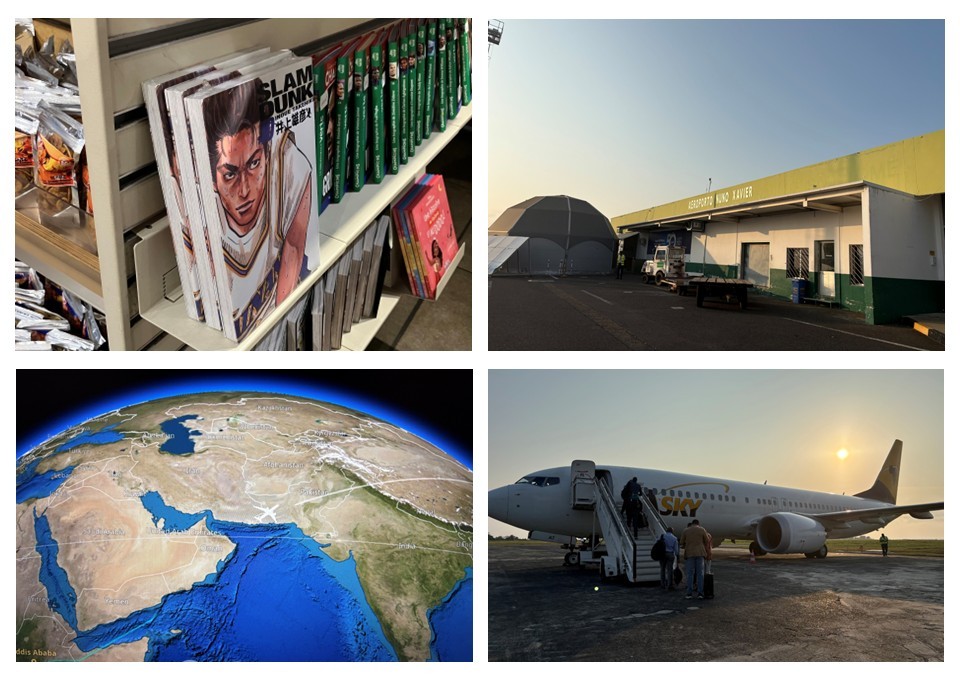
The two photos on the right: São Tomé International Airport and the aircraft for the journey
③ Exploring the City of São Tomé
Central São Tomé is a compact urban area stretching approximately three to four kilometers. The streets are lined with red-tiled roofs and pastel-colored buildings that retain traces of the Portuguese colonial era. Relatively wide roads and promenades run along the waterfront, although construction work was underway in many places, as shown in the photographs. Seeing infrastructure essential to daily life being developed gave me a sense that the city itself was in the midst of change.
On the second day of my stay, however, the hotel’s entire water supply stopped, requiring me to relocate to another hotel operated by the same group. I had anticipated the possibility of not having hot water in the shower, but I certainly had not expected a hotel staff member to tell me, “Water all stopped.” The experience gave me a firsthand appreciation of the importance of reliable infrastructure in everyday life.
The streets were busy with pedestrians, cars, and motorcycles. Japanese vehicles were particularly common, including many older models that are rarely seen in Japan today, giving me an almost nostalgic sense of having stepped back in time. According to my taxi driver, Toyota vehicles are popular, as is Suzuki’s Jimny, for which customers may have to wait nearly two years for delivery.
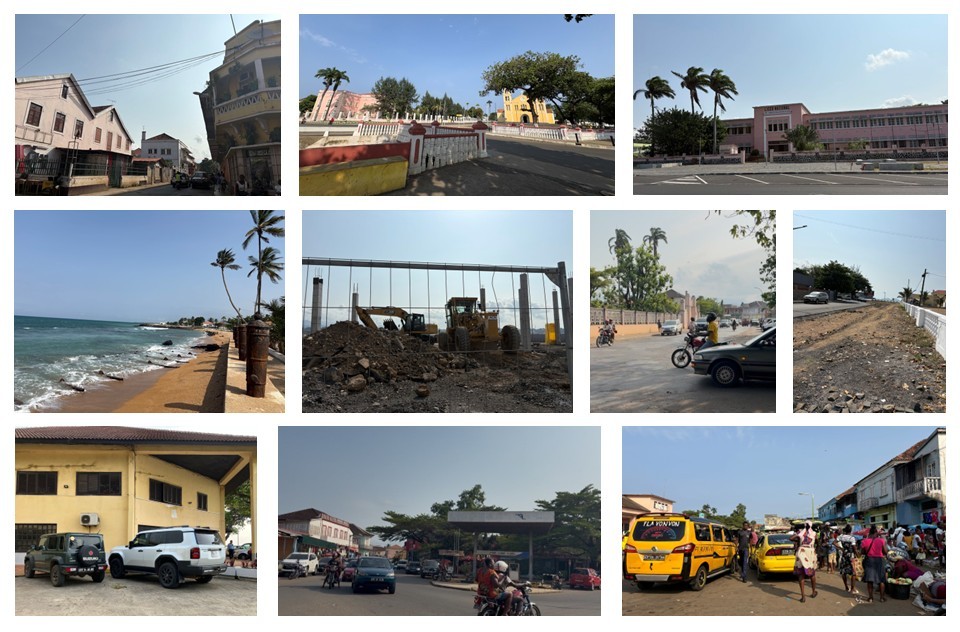
The yellow vehicles are taxis, known locally as “yellow cabs.”
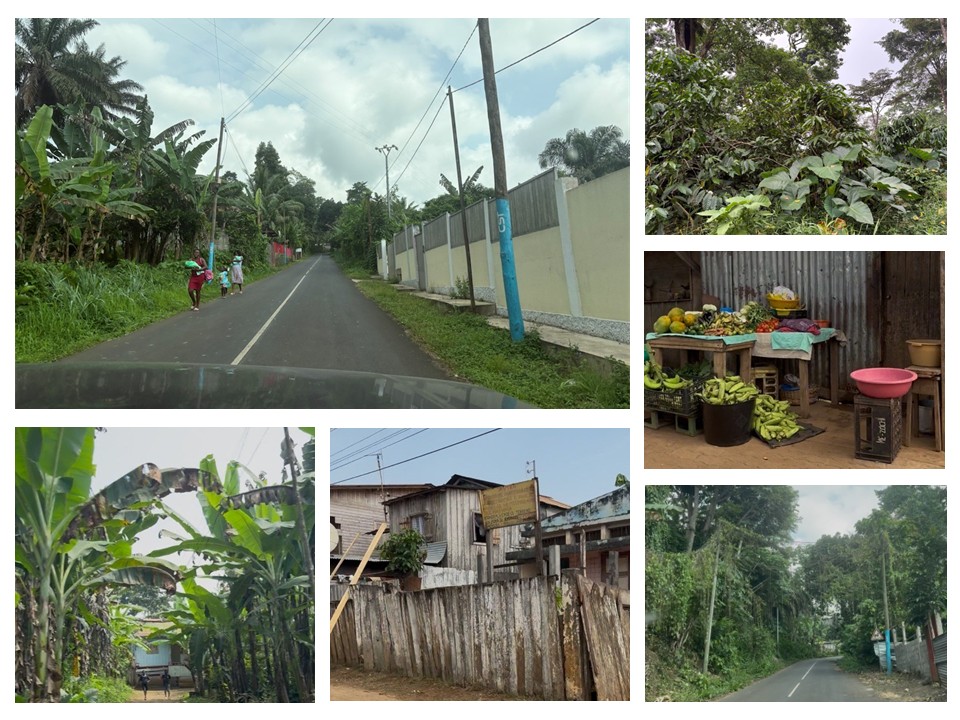
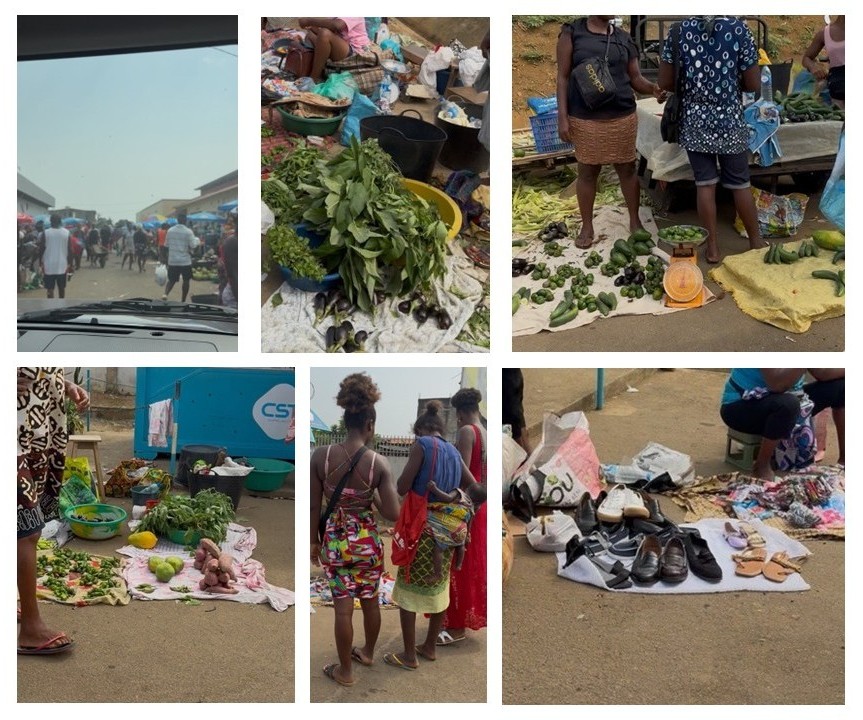
The day after the meeting, there were no scheduled flights, giving me some extra time. Wanting to experience aspects of daily life beyond central São Tomé, I visited Monte Café, a mountainous area in central São Tomé Island, approximately a 30-minute drive from the city center. As we left the city center, the urban landscape gradually gave way to lush green countryside. Simple houses made of wood and corrugated metal stood alongside paved roads, while tropical vegetation, including banana and palm trees, grew close to residential areas. As we climbed to higher elevations, coffee trees became increasingly common. Small roadside stalls displayed bananas, vegetables, fruits and other local produce, offering a glimpse into the everyday lives of local communities.
During the drive to Monte Café, my taxi driver pointed to the dense vegetation and told me stories such as, “When I had malaria as a child, we boiled this plant and took it,” and “This plant is good for stomach problems.” His stories made me realize how traditional practices and knowledge continue to be passed down as part of everyday life.
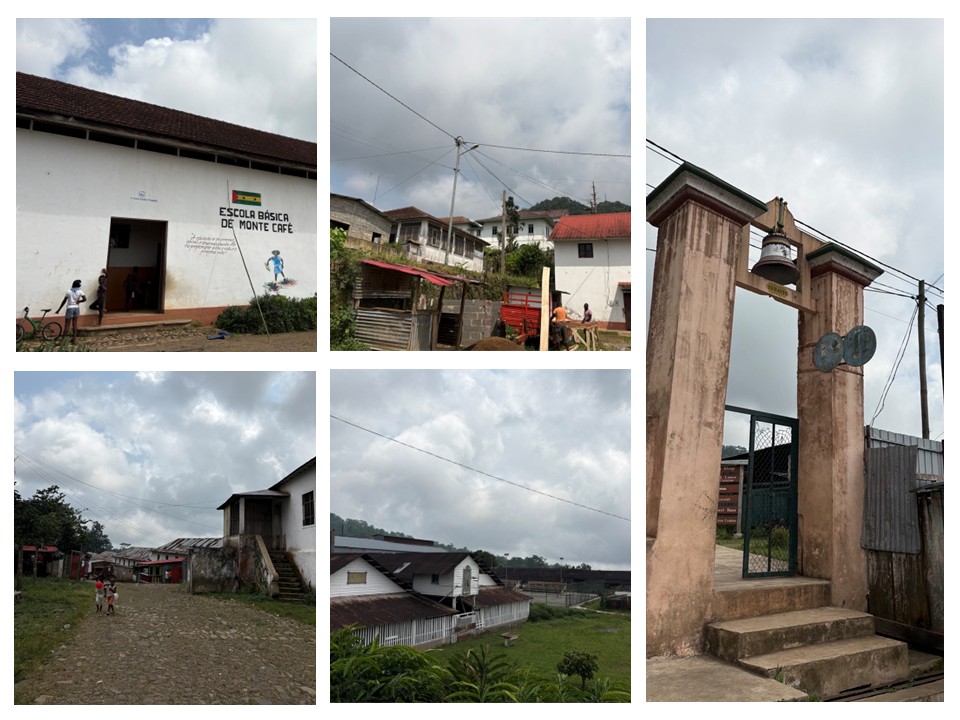
As its name suggests, Monte Café is a town that once grew around a large coffee plantation known as a “Roça”. At that time, it functioned almost as a self-contained community, with facilities for processing coffee beans, as well as a hospital, chapel and housing for workers. This development, however, was built upon enslaved labor under colonial rule. Some of the facilities from that period still remain and are now used as schools and residential areas.
④ Infection Prevention for Travelling
In preparation for this trip, I reviewed infectious disease risks at my destination as well as entry requirements associated with the countries on my itinerary. In addition to receiving vaccinations, including those for yellow fever and tetanus, I took antimalarial medication. Yellow fever vaccination is not universally required for travel to Africa; requirements vary depending on the destination, transit countries, and duration of stay. As my itinerary included transit through Ethiopia, I carried an International Certificate of Vaccination of Prophylaxis for yellow fever, commonly known as a “Yellow Card.”
Around the time that my travel plans were finalized, outbreaks of Ebola virus disease had been reported in parts of Africa, with airports along my journey displaying notices warning travelers about Ebola. Seeing these notices brought a certain sense of unease about the invisible threat posed by infectious diseases, while also reminding me that infectious diseases know no borders. The trip gave me an opportunity to reflect not only on the importance of taking appropriate personal preventive measures, but also on the importance of obtaining accurate information and strengthening infectious disease preparedness across national borders.
⑤ Reflecting on the Long-Distance Business Trip
During the approximately 35-hour journey each way to São Tomé and Príncipe, I found myself thinking about how, for patients living in areas where healthcare facilities are not readily accessible, simply traveling to receive treatment may itself represent a significant burden.
The long distance to a destination, the anxiety of traveling through unfamiliar places, language barriers, limited transportation options, the financial burden of travel and accommodation, and environments where it can be difficult to rest adequately—all of these factors can make a journey challenging. Even as a healthy traveler, I found such prolonged travel physically and mentally demanding. It is important to recognize that my experience on a business trip cannot be equated with that of patients traveling to seek medical care while living with an illness. Nevertheless, the journey gave me an opportunity to think more deeply about the challenges and hardships patients may encounter even before they are able to receive treatment.
The existence of medicines and treatments does not always mean that they will reach the people who need them. Patients may have to face numerous barriers on their journey to medical care, including distance, cost, transportation and access to health information. This visit reinforced for me the importance of looking beyond the disease itself and considering the broader living conditions and social challenges surrounding patients.
My visit to São Tomé and Príncipe offered a glimpse of its beautiful natural environment, peaceful streets and the everyday lives of its people, as well as the ongoing efforts to strengthen the foundations that support healthcare and daily life. At the same time, it also highlighted some of the challenges that remain, including geographic constraints, infrastructure and access to healthcare.
Efforts to eliminate lymphatic filariasis go beyond addressing a single infectious disease. By reducing the physical suffering and social and economic burdens caused by the disease, they can also contribute to creating the foundations of a society in which people can lead healthier and more secure lives with dignity. Rather than letting this remain simply a one-time business trip to a distant country, I hope to carry the experience forward as a source of motivation to keep thinking about what we can do, and to keep taking action, toward a world where patients can access the healthcare they need, wherever they live.
References:
Ministry of Foreign Affairs of Japan, Basic Data on São Tomé and Príncipe: https://www.mofa.go.jp/mofaj/area/stp/index.html
Roça Monte Café: https://pousadas.st/destinations/103-roca-monte-cafe.html
Share


