
- Patients and People
- Global Health
July 16, 2026
In São Tomé and Príncipe, an island nation off the west coast of Africa, final surveillance has begun toward the elimination of lymphatic filariasis as a public health problem. Eisai has been supporting this initiative since 2018 through a number of measures including the free provision of Diethylcarbamazine (DEC) tablets.
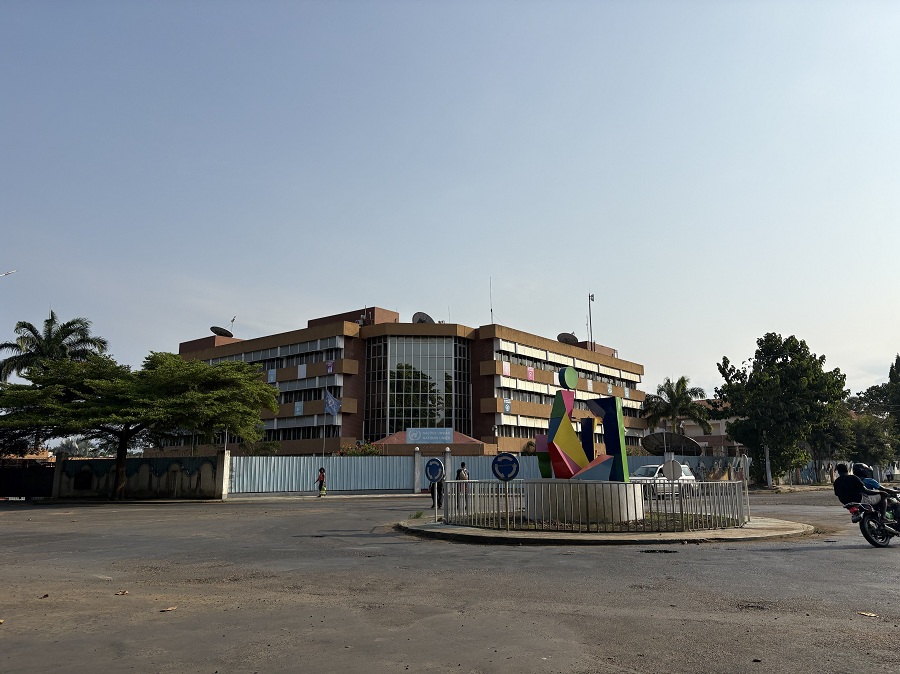
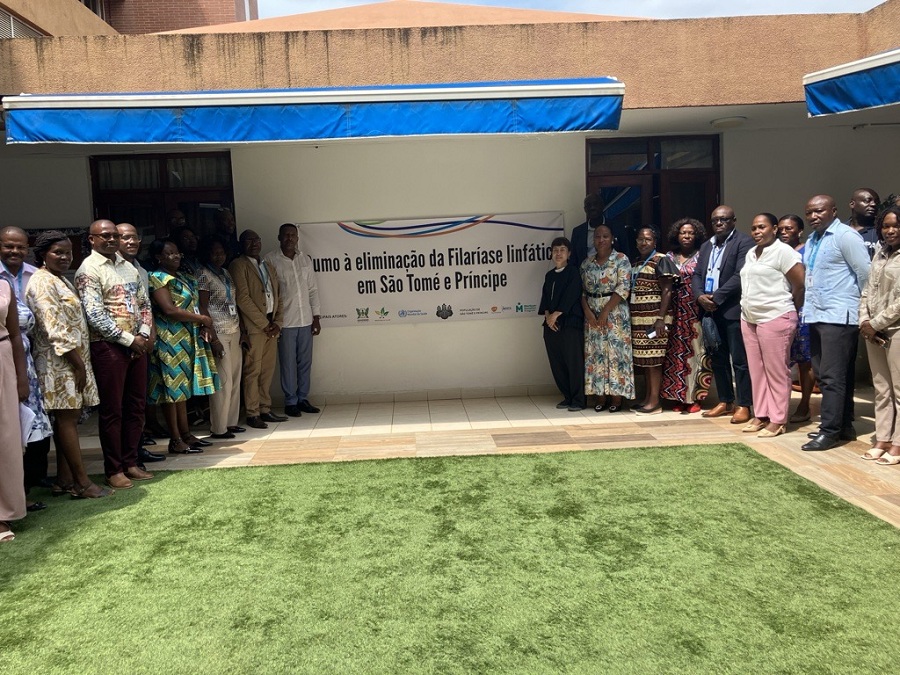
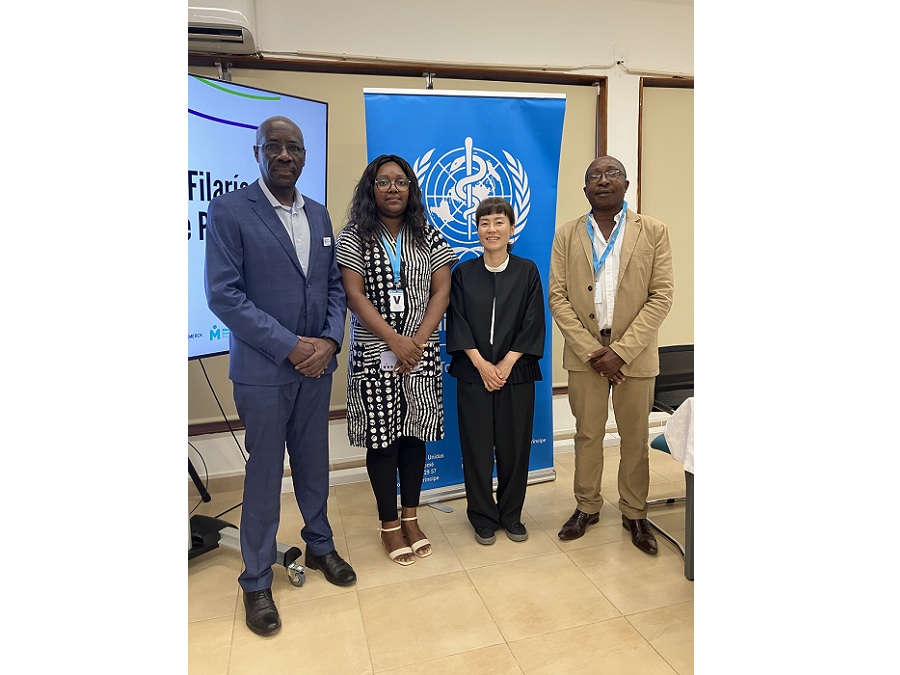
Eisai was invited to attend a launch meeting held on May 29, 2026 at the United Nations conference room in São Tomé and Príncipe to mark the start of the final surveillance phase toward the elimination of lymphatic filariasis*1.
There were approximately 30 participants, including H.E. Celso Vaz do Nascimento Matos, Minister of Health of São Tomé and Príncipe (“Minister Nascimento Matos”), Dr. Vilfrido Santana Gil, Country Preparedness & IHR (CPI), WHO Country Office in São Tomé and Príncipe (“Dr. Santana Gil”), as well as representatives from the government and public health officials, WHO officials, and healthcare professionals.
The meeting represented an important milestone, indicating that São Tomé and Príncipe’s efforts to eliminate lymphatic filariasis are now entering their final phase. In this article, Miwa Jindo of Eisai’s Sustainability Department, attended the meeting, and will share the significance of eliminating lymphatic filariasis for the country and its people and the role that Eisai has played through the free provision of DEC tablets.
Toward a Historic Public Health Milestone
Dr. Santana Gil began the meeting by describing the launch of final surveillance as follows:
“The launch of final surveillance is a decisive step to safeguard the achievements made to date and to ensure that lymphatic filariasis will no longer pose a threat to the health and well-being of the people of São Tomé and Príncipe, nor to future generations.”
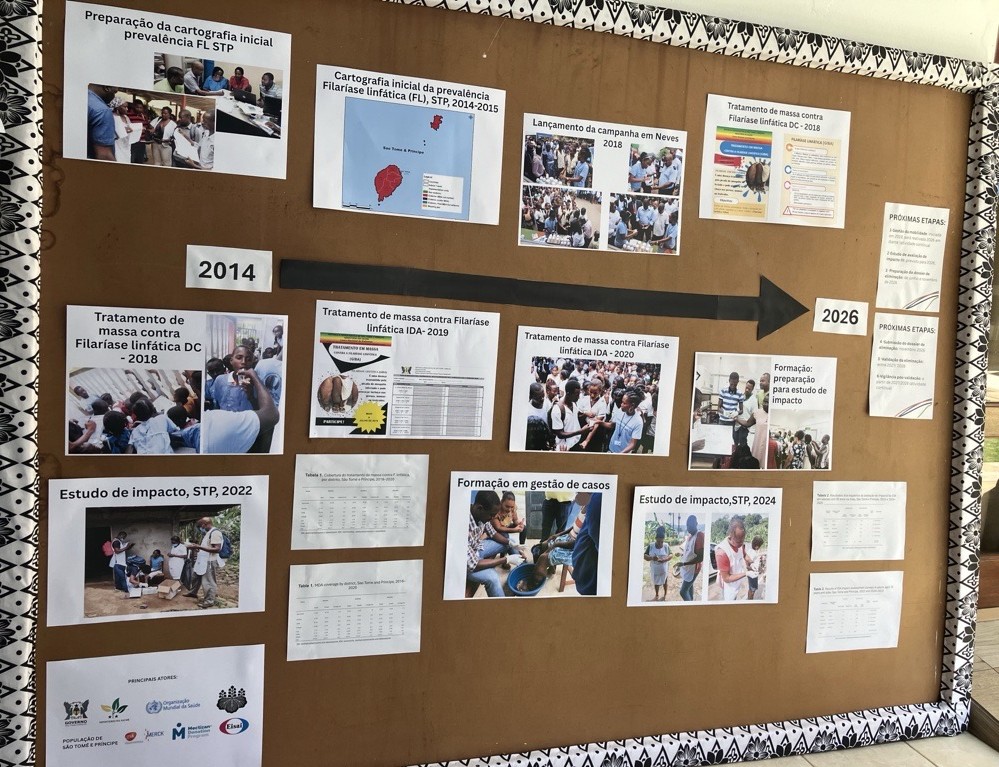
Efforts to eliminate lymphatic filariasis in São Tomé and Príncipe began with a nationwide epidemiological survey of infection status in 2014. Since then, a wide range of activities has been carried out over more than ten years. These activities include community education on the disease and the importance of taking medicine, the transport and inventory management of essential medicines, the implementation of mass drug administration in local communities, follow-up surveillance surveys, and the establishment of systems for morbidity management and disability prevention (MMDP)*2 for patients with symptoms such as lymphedema and hydrocele.
None of these activities is particularly visible or glamorous on its own. One of the examples is the effort to increase community participation in mass drug administration, which is a key component for successful elimination. Government officials and healthcare professionals repeatedly visited local communities to promote accurate understanding of lymphatic filariasis, its causes, the fact that it is preventable, and the importance of participating in mass drug administration for prevention. These efforts led to a participation rate of 84.5% in the first mass drug administration campaign conducted in 2018 , and high participation rates have been maintained since then.
Post-MDA surveillance is also a multi-year process designed to determine whether infection levels have declined sufficiently to allow termination of mass drug administration. For blood sample collection from community members including children, stakeholders practiced blood collection themselves in advance to ensure efficient and accurate conduct of the actual surveillance. In this way, the elimination of lymphatic filariasis requires the steady accumulation of patient, persistent efforts.
Dr. Santana Gil also stated, “The fact that we are able to hold this meeting today demonstrates the possibility that São Tomé and Príncipe can achieve a historic public health milestone. It is also a sign of the confidence that stakeholders have in the country. This will be an internationally significant achievement and an inspiring example for countries in the African region and around the world.” His remarks emphasized that the elimination of lymphatic filariasis is no longer a distant goal, but is becoming a reality within reach.

Appreciation for the Initiatives and the Social Significance of Disease Elimination
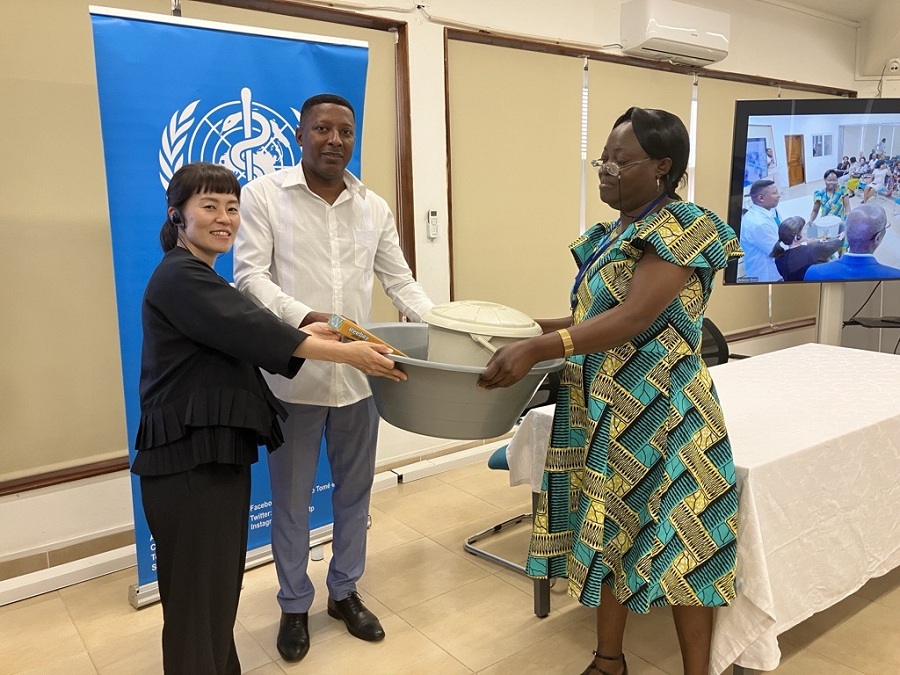
Minister Nascimento Matos expressed his appreciation to the national elimination team that has worked for many years to eliminate lymphatic filariasis, to WHO for its leadership, and to all partners involved in the effort. He also expressed his deep gratitude to the Government of Japan for its support of the final surveillance activities, and to Eisai for providing DEC tablets free of charge and supporting MMDP programs.
In recent years, the funding environment for global health has become increasingly challenging. In fact, there was no clear prospect for conducting the final surveillance. Against this backdrop, support from the Government of Japan is of great significance in enabling São Tomé and Príncipe to conduct final surveillance and move closer to eliminating lymphatic filariasis.
São Tomé and Príncipe continues to face neglected tropical diseases and other infectious diseases, while also needing to respond to emerging challenges, such as the rise of noncommunicable diseases including diabetes and cancer. Minister Nascimento Matos stated:
“If we can eliminate a disease such as lymphatic filariasis, it means one less concern for the country, for the people, and for the government, which must continue to seek funding. The efforts that would otherwise be required can then be directed toward other diseases that continue to affect people.”
Eliminating one disease does more than reduce the burden of that disease. It enables limited healthcare resources to be shifted toward other important priorities and contributes to strengthening the health system as a whole. Moreover, Minister Nascimento Matos also referred to the fact that lymphatic filariasis continues to be associated with significant stigma and social exclusion.
“Unfortunately, this stigma and social exclusion also stem from a lack of understanding of the disease. This disease is not limited to symptoms that appear in the lower limbs of patients; it also has broad and serious social consequences.”
Lymphatic filariasis causes symptoms such as lymphedema, hydrocele, fever, and pain, and can have a major impact on patients’ daily lives and ability to work. Misunderstanding and prejudice associated with the disease can also hinder the social participation of patients and their families, affecting household finances and educational opportunities. When a family’s breadwinner loses employment opportunities, the impact extends to the entire household, including children. These structural challenges are one reason why neglected tropical diseases are deeply linked to poverty.
Minister Nascimento Matos indicated his intention to actively communicate the progress made toward the elimination of lymphatic filariasis through the media, both domestically and internationally, in order to deepen public understanding of the disease and raise awareness of the country’s future development potential .
He concluded with the following words:
“I sincerely hope that this country will be freed from this disease, that transmission will be interrupted, and that this disease will ultimately be eliminated. That will undoubtedly be a major driving force toward a happier future for our people.”
Laying the Foundation for a Country’s Growth and Development, and for Protecting the Lives and Future of Its People
Efforts to eliminate lymphatic filariasis have been supported through collaboration among the national government, healthcare professionals, local communities, international organizations including WHO, other governments, and partner companies and organizations. This is not something that any single institution or organization can achieve alone. It requires all stakeholders to share the same goal, fulfill their respective roles and responsibilities, and continue working in close collaboration over a long period of time. Eisai has contributed to this international initiative through the free provision of DEC tablets. This meeting reminded us once again that, beyond the provision of medicines, collaboration with a wide range of stakeholders is essential to advancing efforts to fight against neglected tropical diseases.
Furthermore, Initiatives such as the elimination of lymphatic filariasis require sustained efforts over many years before results become visible. Each individual activity may be painstaking and require persistence. Yet it is precisely by continuing such efforts together with partner countries that trust is built — trust that leaves a lasting impression on people on the ground. During this visit, we received many words of appreciation from government officials and healthcare professionals for the support provided by the Government of Japan and for Eisai’s long-standing efforts as a Japanese company. Their words conveyed a deep trust in Japan and in Eisai as a Japanese company, trust that went beyond gratitude for the provision of medicines or financial support. This is significant not only for the countries receiving support, but also for those providing it. Sincere and sustained contributions by the Government of Japan and Japanese companies help foster trust in Japan locally and embody the spirit of international cooperation that Japan has long valued. We felt that over time, these efforts have the potential to further deepen relationships of trust in various forms, including through future international exchange and people-to-people exchange.
Through this field visit, I gained a firsthand understanding of the fact that we were once again reminded that reduced infectious disease risk and a stable security environment are important sources of reassurance for visitors. For both tourists and business travelers alike, the ability to visit a country with confidence enhances its attractiveness and helps promote business activity and people-to-people exchange. We felt that improvements in public health extend beyond achievements in the medical field and can serve as a foundation for a country’s sustainable growth and development.
The elimination of lymphatic filariasis represents a symbolic achievement, making a major public health milestone for São Tomé and Príncipe and signaling the country’s advance toward a new stage of national growth. Through partnerships, Eisai will continue contributing to efforts that support this progress and help protect the lives and future of people.
More about local activities and the appeal of São Tomé and Príncipe will be introduced in a separate feature to be published at a later date.
*1 Overview of the lymphatic filariasis elimination program:
In 2000, WHO established the Global Programme to Eliminate Lymphatic Filariasis (GPELF), positioning mass drug administration (MDA) to stop transmission and morbidity management and disability prevention (MMDP) to reduce the suffering of patients with symptoms such as lymphedema and hydrocele as the two main pillars of elimination. To implement MDA, endemic areas must first be identified through mapping. Thereafter, annual MDA is continued for multiple years for all residents in endemic areas where the infection rate is 1% or higher. Depending on the treatment regimen, MDA must continue for at least two to five years, with a required participation rate of at least 65%. Surveillance surveys are continued, including epidemiological monitoring surveys to confirm whether infection levels have sufficiently declined, and transmission assessment surveys (TAS), conducted multiple times every two to three years, to confirm infection has not resurged. These surveys determine whether MDA can ultimately be completed. In addition, the proper design of measures for MMDP for patients with lymphedema, hydrocele, and other symptoms is also an extremely important part of the elimination program.
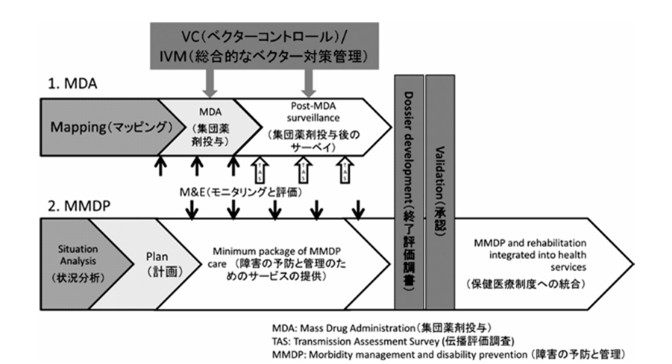
*2 MMDP: Morbidity Management and Disability Prevention
References:
https://espen.afro.who.int/updates-events/updates/sao-tome-and-principe-verge-eliminating-lymphatic-filariasis-public-health?utm_source=chatgpt.com
https://minsaude.st/legislacao/?utm_source=chatgpt.com
https://www.who.int/teams/control-of-neglected-tropical-diseases/ending-ntds-together-towards-2030
https://www.jstage.jst.go.jp/article/jaih/33/1/33_1/_pdf
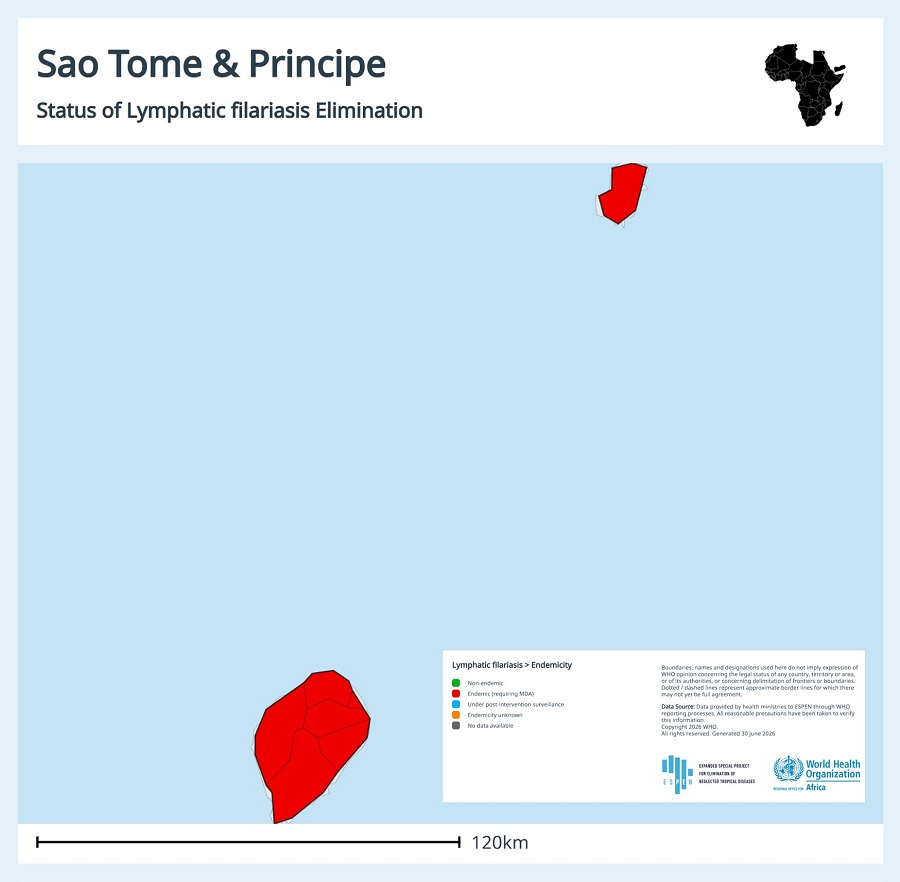
https://espen.afro.who.int/maps-data/countries/sao-tome-and-principe#lf--maps
Share


