
- Corporate
- For Print
- August 18, 2026
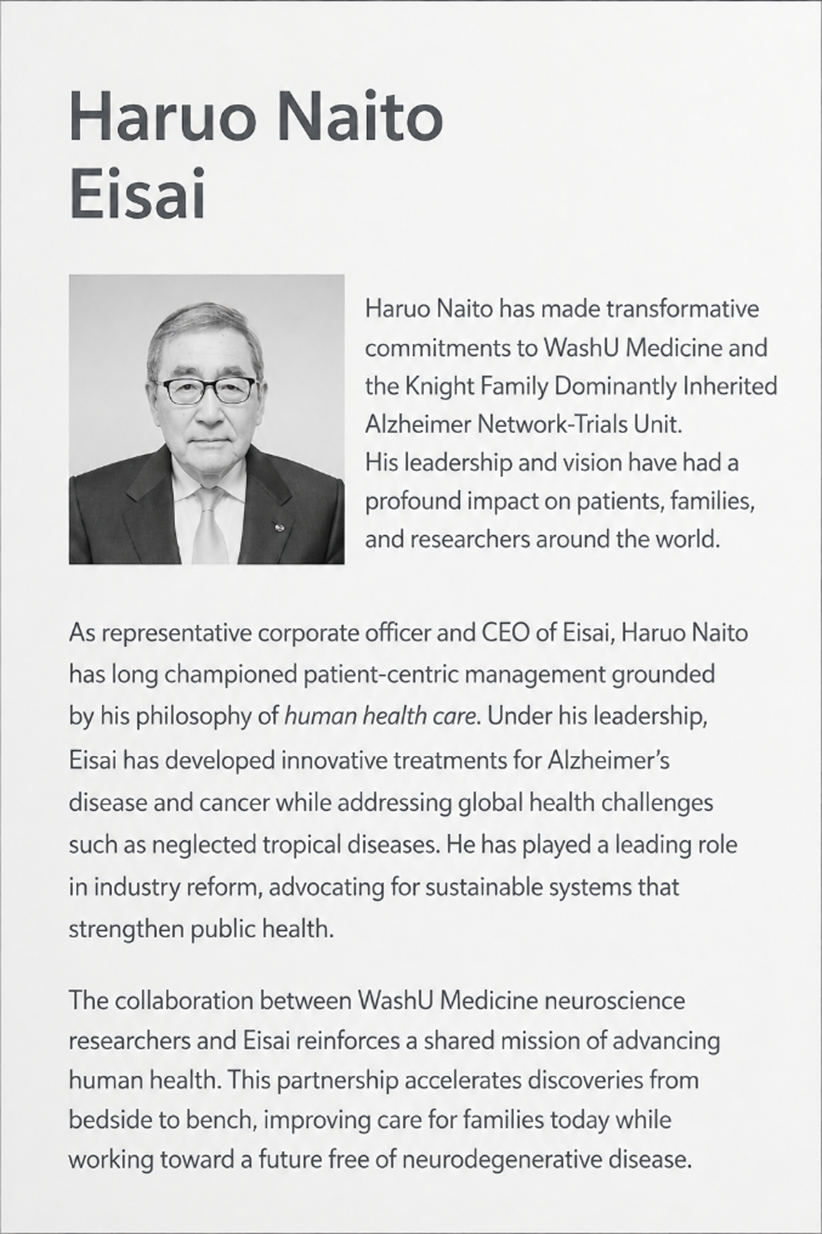
Eisai Co., Ltd. (Headquarters: Tokyo, “Eisai”) announced today that Washington University School of Medicine in St. Louis (“WashU Medicine”) held a ceremony unveiling a plaque honoring the longstanding contributions and achievements of CEO Haruo Naito and Eisai in healthcare, including in the field of Alzheimer’s disease (AD). The plaque, commemorating these achievements, will be permanently displayed on a wall in the lobby of the Jeffrey T. Fort Neuroscience Research Building (NRB).
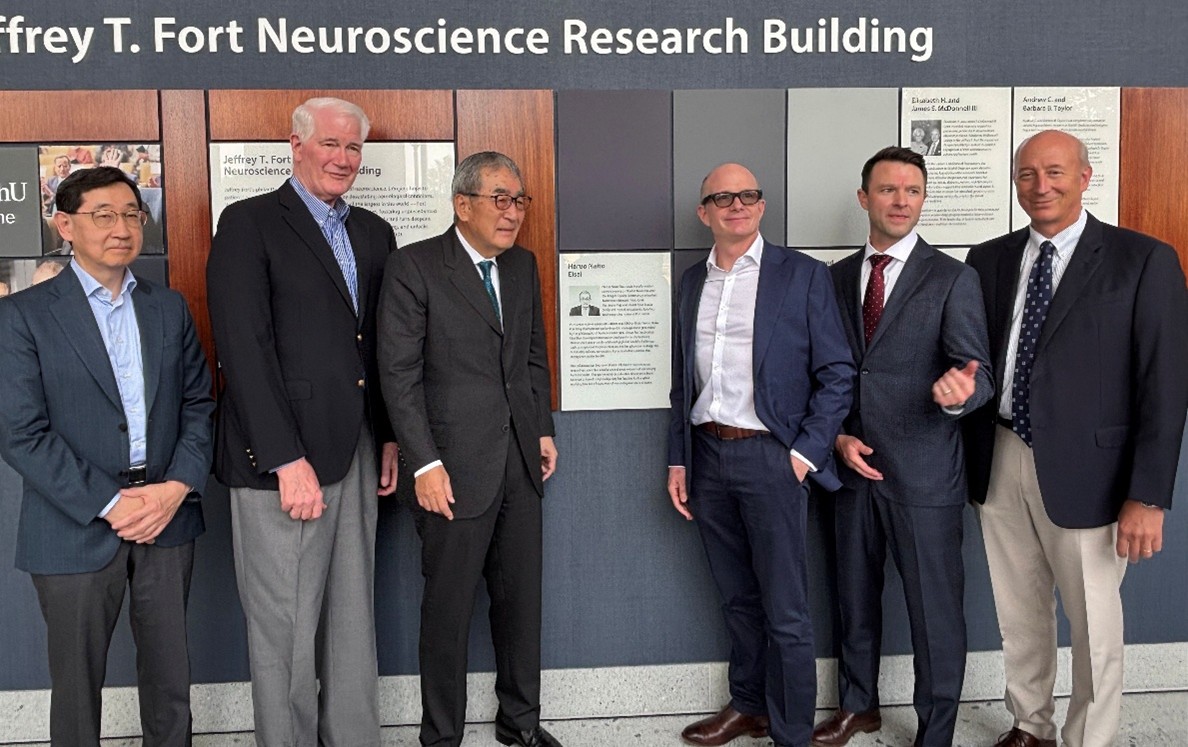
CEO Haruo Naito and Eisai were recognized for their long-term and significant contributions to WashU Medicine and the Knight Family Dominantly Inherited Alzheimer Network-Trials Unit (DIAN-TU), as well as for the profound impact CEO Naito’s leadership and vision have had on patients, families and researchers around the world.
Eisai and WashU Medicine have been collaborating in research on neurodegenerative diseases, including dementia and Parkinson’s disease. In particular, in the AD field, the Phase II/III Tau NexGen Study conducted by the Dominantly Inherited Alzheimer Network Trials Unit (DIAN-TU), led by the University’s School of Medicine, is exploring the safety, tolerability, biomarkers and cognitive efficacy of Eisai's anti-MTBR (microtubule binding region) tau antibody etalanetug (E2814) for the treatment of dominantly inherited Alzheimer's disease (DIAD). In this study, the anti-amyloid beta (Aβ) protofibril antibody lecanemab was selected as the backbone anti-amyloid therapy.
The collaboration between WashU Medicine neuroscience researchers and Eisai reinforces a shared mission of advancing human healthcare, which accelerates turning discoveries from medical research into solutions for patients, improving care for families today while working toward a future free of neurodegenerative disease.
Media Inquiries:
Public Relations Department,
Eisai Co., Ltd.
+81-(0)3-3817-5120
Our news releases are intended to disclose corporate information and are not intended for the promotion or advertising of prescription pharmaceuticals or investigational products, nor are they intended to provide medical advice.
Please note that the information contained in news releases is current as of the date of publication.